
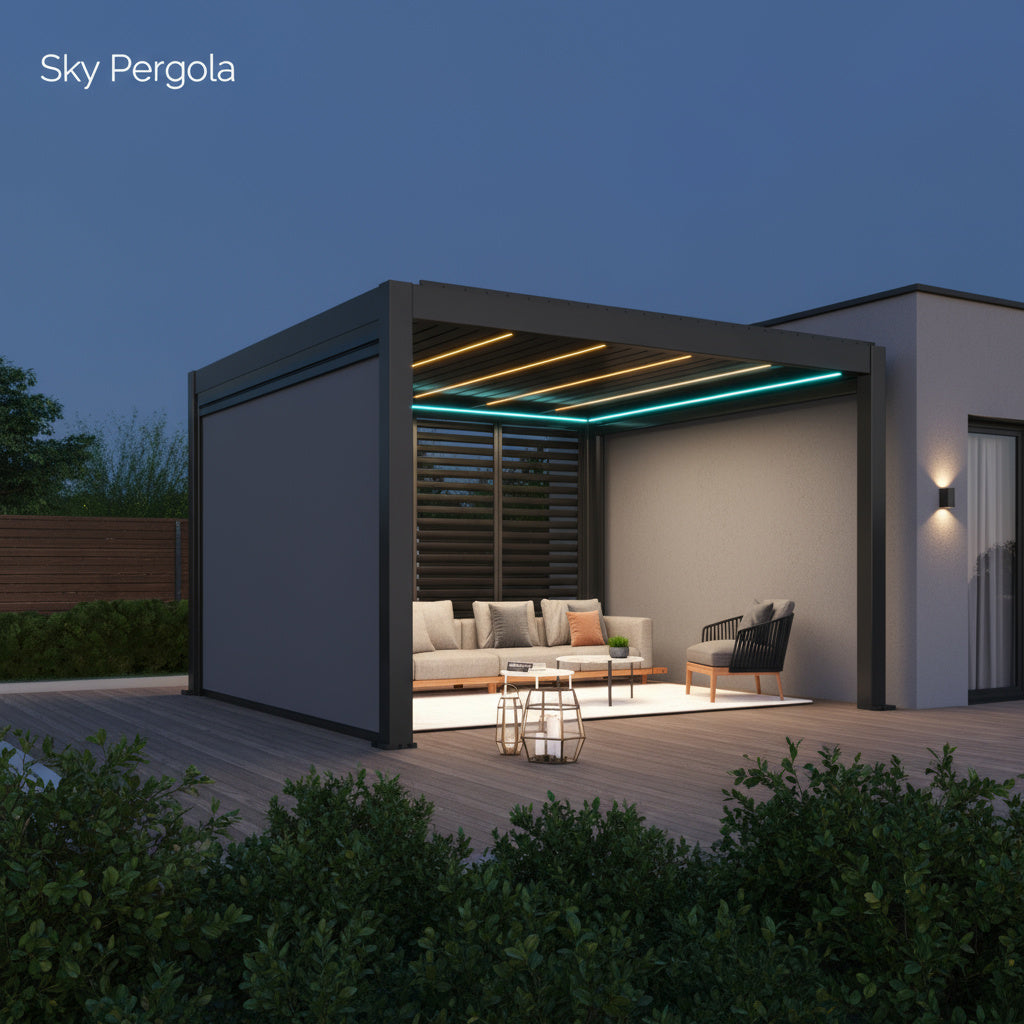
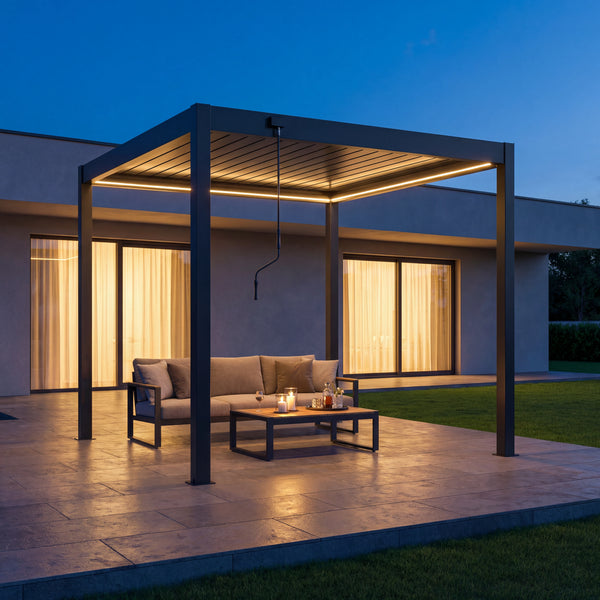
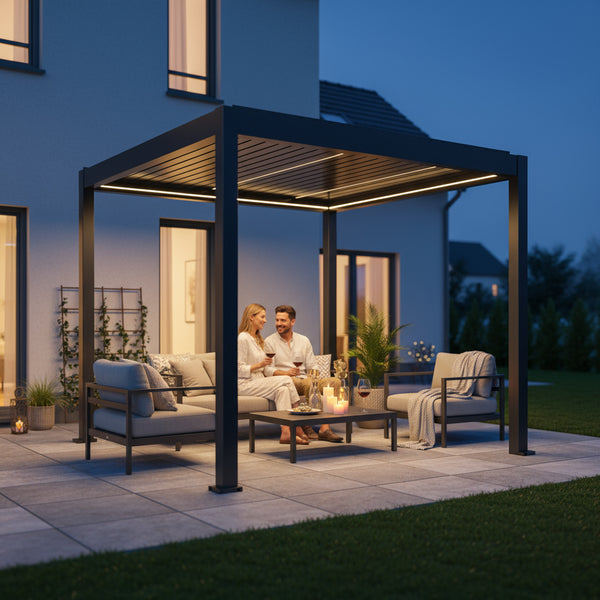
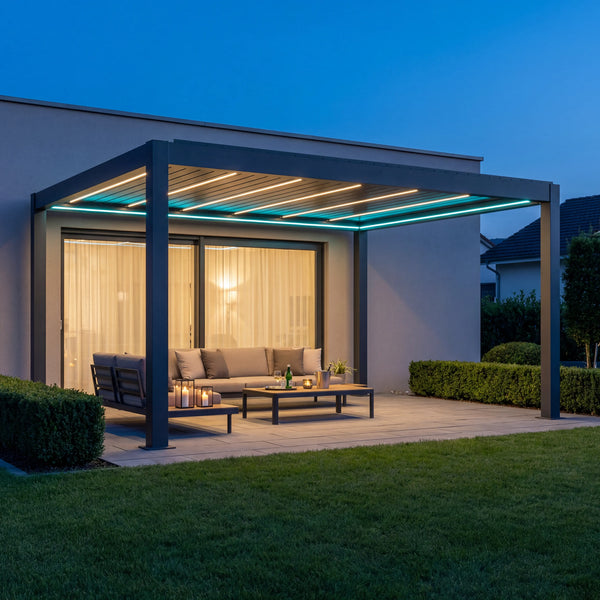






Anyone planning a covered seating area in the mountains must consider different conditions than in the Central Plateau. Snow, frost, and extreme temperature fluctuations impose demands on the foundation, structure, and surface that are rarely encountered in lowland areas. This article explains what matters for roofing in snowy regions and why groundwork is just as important as the roof itself.
Snow Load: The Most Important Figure
How much snow a roof must support in Switzerland depends mainly on altitude and region. The SIA 261 standard determines the characteristic snow load for each location. In the higher elevations of Graubünden, this load is many times greater than in the Central Plateau.
For planning, this means the permissible snow load of the roof must match the location. Reputable providers specify this value in kN/m². If it is below the load at your site, a reinforced design, additional supports, or another solution is necessary. When in doubt, a structural engineer can provide a definitive answer, and proof is often required during approval procedures.
The Foundation is Key
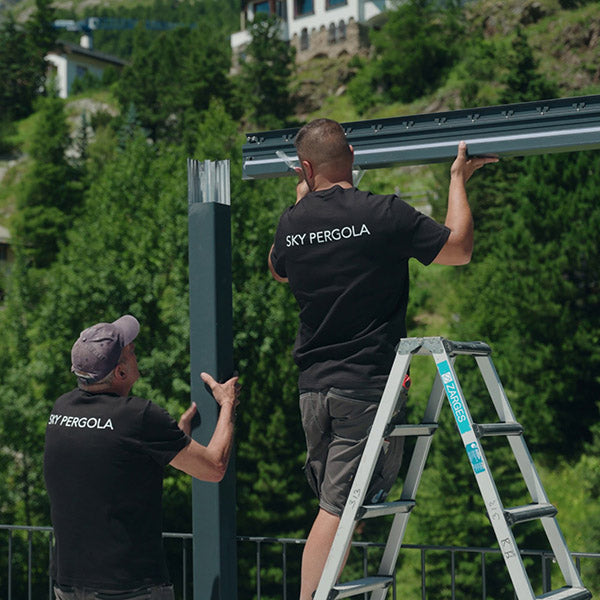
A roof is only as stable as its anchoring. In mountain areas, two additional points apply:
- Frost-proof foundation: Point foundations must be deep enough to prevent frost heave. The required depth is greater at higher altitudes than in lowlands.
- Proper load transfer: The snow load transfers through the supports into the foundations. These must be dimensioned accordingly, not just for the structure’s own weight.
If the seating area is on an existing surface, such as natural stone, it is worthwhile to plan the foundations and surface together. Drilling through a finished stone surface afterward is laborious and rarely looks good.
Thinking of Natural Stone and Roofing Together
In Graubünden, natural stone seating areas are part of the local character. They are durable and frost-resistant when properly installed. An experienced landscaper knows how to build the substructure so the surface remains level after many winters and where the foundations for a future roof can be placed. An example of such work in the region is the natural stone work by Flepp Gartenbau in Graubünden, from seating areas to walls.
If surface and roof are installed at different times, the future support positions should be determined when laying the surface, and the foundations installed at the same time.
In Winter: Don’t Just Let Snow Sit
- Clear large amounts of snow: Even a properly dimensioned roof benefits when snow is removed after heavy snowfall, especially wet, heavy snow.
- Watch for roof avalanches: If the roof is under a house roof, sliding snow can create very high localized loads. This must be considered in planning.
- Keep drainage clear: Gutters and downspouts should not freeze. Meltwater that cannot drain will freeze again at night.
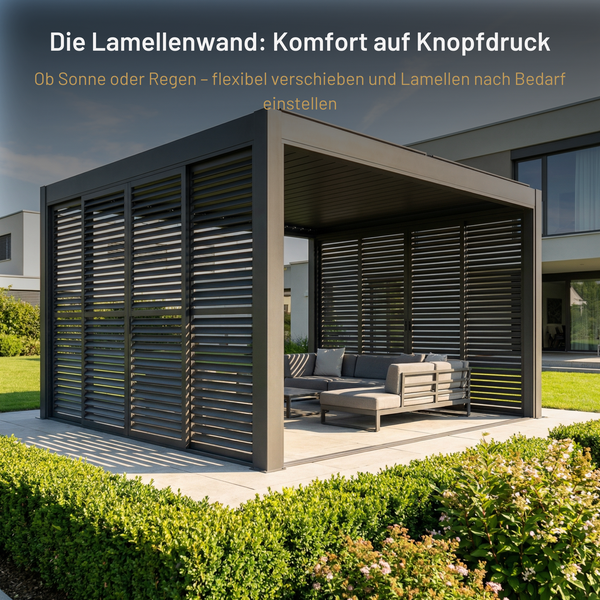
- Follow manufacturer instructions: For louvered roofs, the manufacturer specifies the position the louvers should be in during snow.
Don’t Forget Permits
Permanent roofs generally require permits in Switzerland. In protected village areas and core zones, common in many Graubünden villages, additional requirements for materials and colors often apply. Early consultation with the municipality saves time later.
Conclusion
In snowy regions, a good roof starts at the ground: with a frost-proof foundation, a properly constructed surface, and a structure whose snow load matches the location. Those who bring landscapers, structural engineers, and providers together early will enjoy their seating area for many winters.


